A finished basement is how a lot of Ajax families get more house without moving — a bedroom for a growing kid, a suite for a parent moving in, a space that might one day help with the mortgage.
But there’s a difference between a basement that’s drywalled and a basement that’s genuinely comfortable to live in. That difference is mostly decided by one thing nobody sees once it’s done: what goes against the foundation wall, behind the drywall. Get it right and the space is warm, dry and quiet. Get it wrong and you’ve built a cold, and possibly damp, room that someone has to sleep in.
Here’s how to get it right.
The difference between “finished” and “livable”
Plenty of Ajax basements are finished — drywall, flooring, paint. Fewer are genuinely comfortable year-round, and the reason is almost always what’s behind the walls.
A basement people actually want to live in needs three things a quick finish often skips:
- Warmth — a foundation wall is cold, and cold radiates
- Dryness — foundations move moisture, and a bedroom is the worst place for hidden damp
- Quiet — nobody wants footsteps overhead all evening, and nobody upstairs wants to hear the suite
Spray foam and its companion products handle the first two. The third needs a different approach. Let’s take them in order.
Warmth and dryness: what goes on the foundation wall
The common shortcut: frame a wall against the foundation, stuff it with fibreglass batts, add a plastic sheet, drywall over it. Fast and cheap.
Why it’s risky in a room people live in:
Foundation walls let moisture through — soil sits against them, concrete is porous, and there’s always some dampness moving inward. Fibreglass holds that moisture. The wood framing stays damp. And a plastic vapour sheet in the wrong spot traps it so the wall can’t dry. In a storage basement you might never notice. In a bedroom where someone sleeps eight hours a night, hidden moisture and the mould that can follow are a real problem.
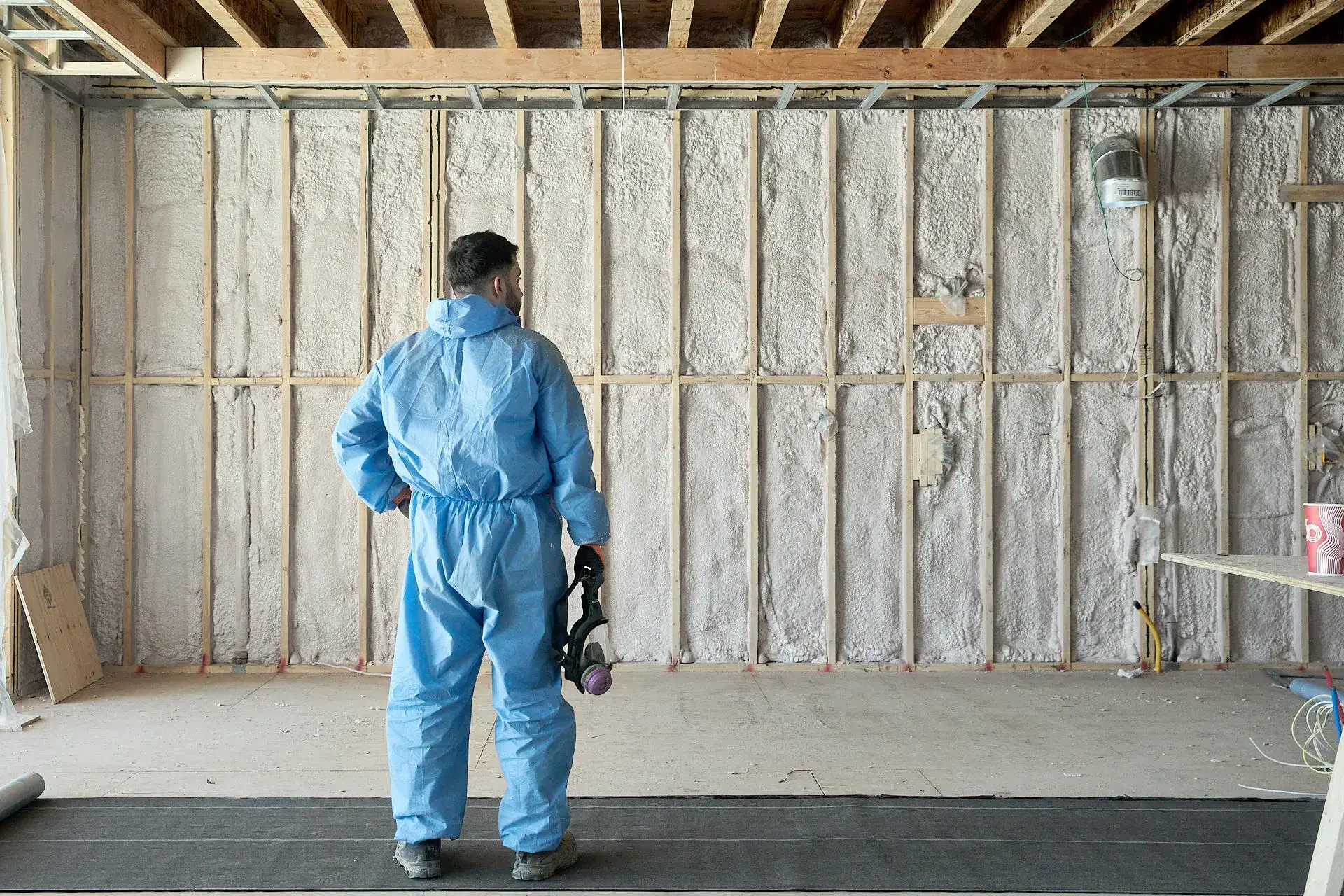
The better way for living space: spray closed-cell foam directly onto the foundation wall before framing.
- It seals to the concrete with no gap for moisture to collect
- It resists water instead of soaking it up
- It’s its own moisture barrier at the right thickness
- The framing goes in front of it, staying warm and dry
- It gives you more warmth in less thickness — meaning less lost floor space, which matters in a basement
This is the assembly you want behind a wall someone’s going to sleep against. Closed-cell spray foam → · Vapour barrier →
And don’t forget the rim joist — the band of wood at the very top of the foundation, around the ceiling edge of the basement. It’s almost always a bare air leak, and sealing it with foam makes the whole basement warmer and less drafty. It’s also cheap and quick. Do it before the ceiling goes in.
Quiet: the part everyone forgets until it’s too late
This is the one families regret skipping.
If the basement is going to be a bedroom, a suite, or a space someone lives in independently, the sound between the basement and the main floor decides whether it works. Footsteps, TV, conversations, a teenager’s music — all of it travels through the floor unless you plan for it.
Closed-cell foam is the wrong tool for this. It’s rigid and dense, which is great for warmth and moisture but poor for sound — it actually transmits noise.
For quiet, you want:
- Acoustic mineral wool in the floor joists between the basement and main floor
- Sometimes resilient channel under the joists to further break the sound path
- Open-cell foam or mineral wool in any interior basement partition walls
The catch: this has to go in while the basement ceiling is open, before drywall. Retrofitting sound isolation into a finished basement means tearing the ceiling back down. Plan it now or lose the chance. Safe and Sound acoustic insulation → · Open-cell foam →
The order to do it in
Sequence matters in a basement because each step covers the last:
- Fix any water problem first. Grading, downspouts, drainage, any seepage. Insulation and foam do NOT fix a wet basement — and foam over an active leak just hides it. This is non-negotiable before you finish a basement someone will live in.
- Rim joist — foam and seal
- Foundation walls — closed-cell foam, then frame in front
- Ceiling sound isolation — mineral wool (and channel) while open
- Rough-in — electrical, plumbing, HVAC (a lived-in basement needs its own heat/air supply — a bedroom with no vent is a cold bedroom)
- Drywall — standard board, plus moisture-resistant board in any basement bathroom
- Finishes
Steps 1–4 are the ones you can’t redo without demolition. Everything after can be changed later.
Two things about basement living space that aren’t our department — but you must know
Being straight with you, because these trip up families all the time:
1. A basement bedroom needs a legal way out. Any room used for sleeping generally needs proper egress — typically a window big enough to climb out of in a fire. This is a life-safety requirement, not an optional upgrade. It’s not insulation work, but if your basement bedroom doesn’t have it, that’s a bigger priority than insulation.
2. A basement apartment / income suite is a legal process, not just a renovation. If you’re thinking about a rental unit, second suites in Ajax have to meet specific requirements — registration, fire separation, egress, ceiling height, permits, and more — enforced by the Town and the building/fire codes. We’re insulation contractors, not the authority on any of that. Talk to the Town of Ajax and a qualified designer/inspector before you build. We can do the insulation, sound and moisture work to a high standard — but the legality of a suite is on a different track entirely, and it’s worth getting right before you spend.
We’d rather tell you this up front than have you build a beautiful, well-insulated suite that runs into a permit problem later.
Where foam isn’t the answer
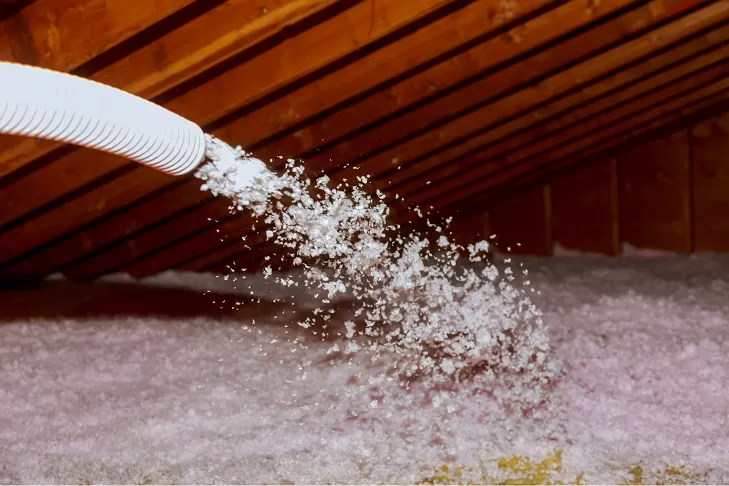
Your attic — standard truss attic with headroom, blown-in reaches full depth for less. Attic insulation in Ajax →
Sound-only interior walls — mineral wool, not closed-cell.
Over a wet basement — fix the water first, always.
The cold room over the garage — that’s a garage-ceiling foam job, separate from the basement. Garage ceiling insulation →
Practical questions
Can you insulate my basement so it’s warm enough to live in? Yes — closed-cell foam on the foundation and rim joist is exactly what makes a basement comfortable year-round. We’ll also flag the moisture and sound pieces.
Do I need to leave during installation? We install Insulthane Extreme by Elastochem and residents can generally remain in the home. We’ll discuss ventilation and re-entry for the area, and flag any respiratory sensitivities in advance.
Will foam keep my basement suite quiet? Foam handles warmth and moisture, not sound. For quiet you want mineral wool (and possibly resilient channel) in the ceiling — installed before drywall.
My basement gets a bit damp. Can I still finish it? Not until the moisture source is fixed. Finishing over a damp basement — especially one someone will live in — invites mould behind the walls. Fix the water first.
Can you handle the insulation and the drywall? Yes — foam, moisture strategy, sound, and drywall on one job. Most insulation contractors don’t do the drywall side.
Does basement work qualify for the rebate? Basement wall and rim-joist insulation each qualify under the program’s bundled path, depending on R-values and coverage. Ajax rebate guide →
⚠️ Program terms change — confirm at homerenovationsavings.ca.
Get the behind-the-walls part right
The finishes are what you’ll see. What’s behind them is what decides whether the space is warm, dry and quiet enough for someone to actually live in. That’s the part to get right first — and the part that’s expensive to fix later.
Pro Insulation Contracting has insulated Ontario homes for over 10 years and serves Ajax and Durham Region. We’ll assess the foundation, rim joist, moisture and sound, tell you what the space needs, and quote a fixed price — insulation and drywall together if you want it.
📞 (416) 315-0471 · Book a free assessment →